
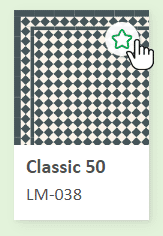
Chequerboard floor tile designs
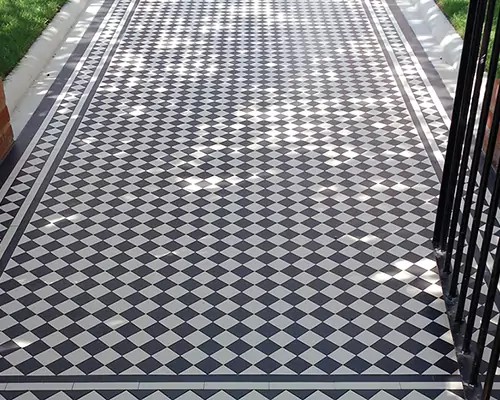
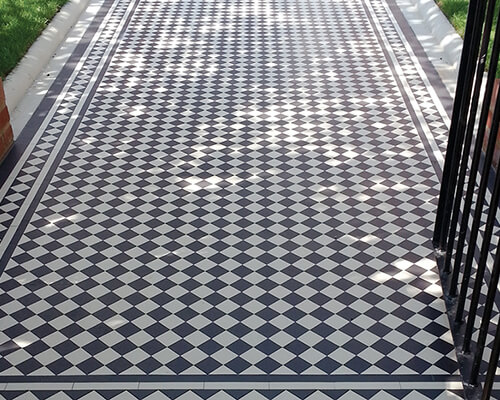
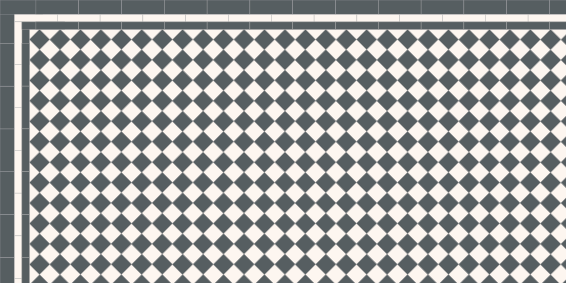
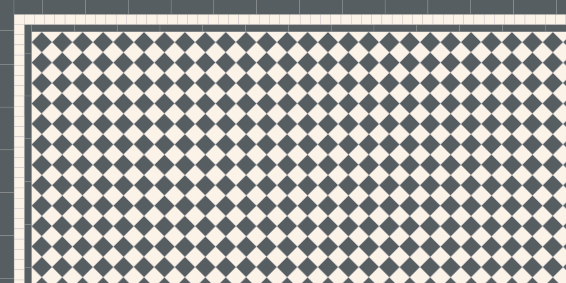
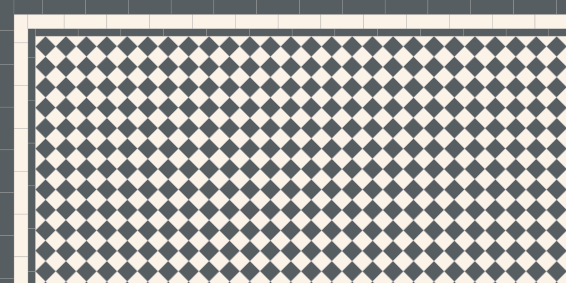
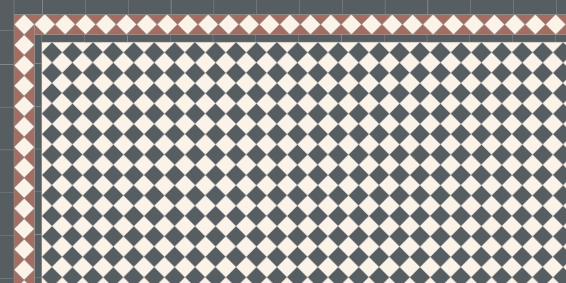
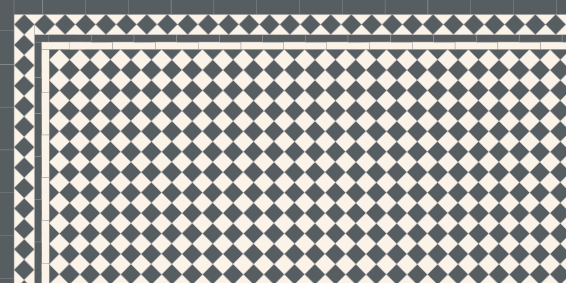
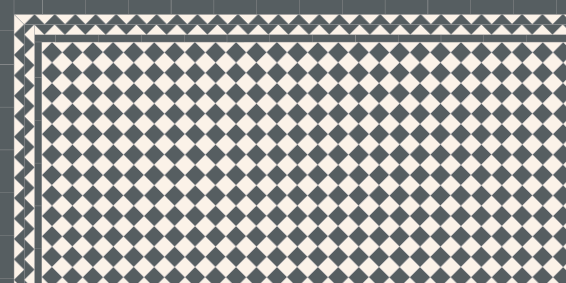
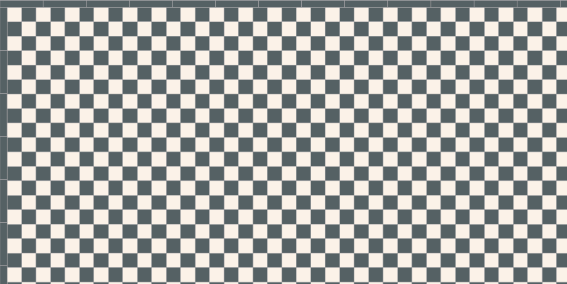
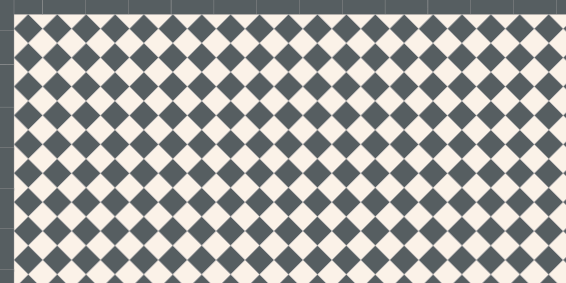
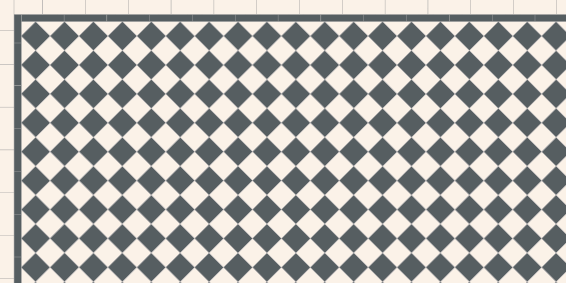
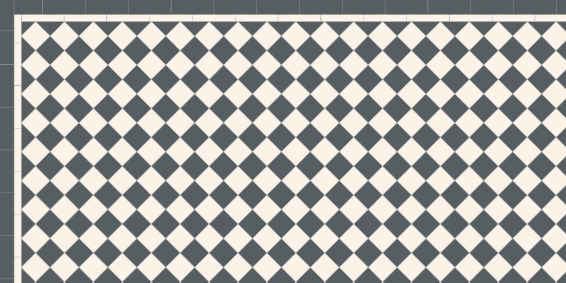
This simple pattern is one of the most recognisable and enduring Victorian tile designs, a standard of the era and wonderfully adaptable for all spaces.
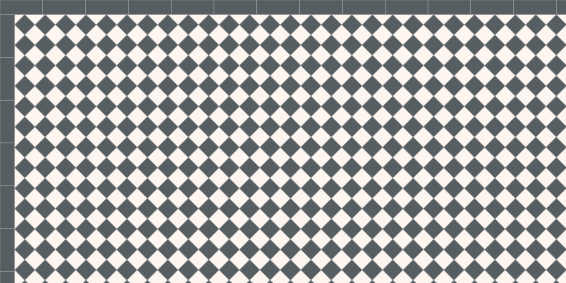
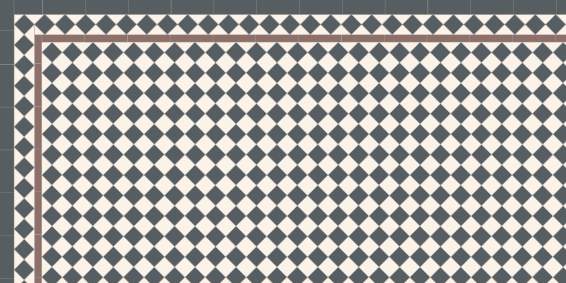
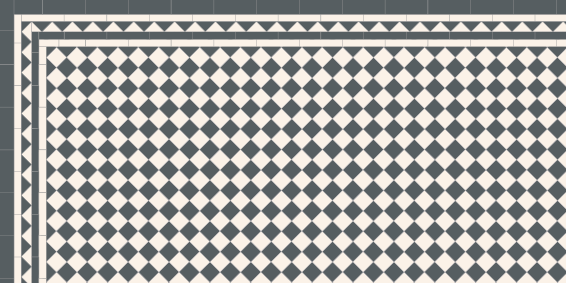
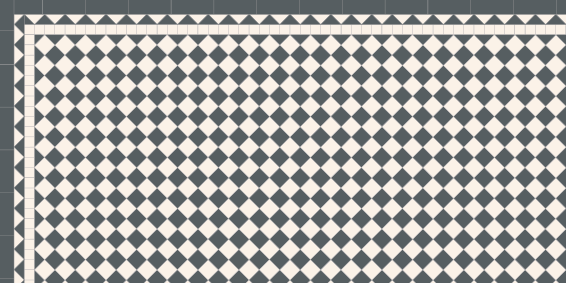
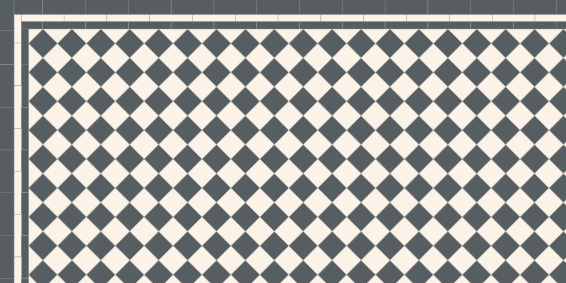
Typically laid in black and white, the chequerboard offers a timeless and versatile look that suits both traditional and contemporary settings, from pathways and steps to entrance halls and other high-traffic areas.
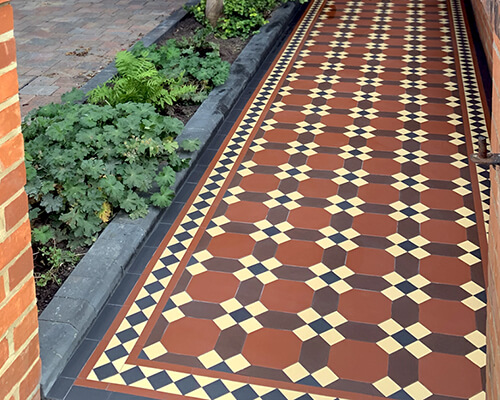
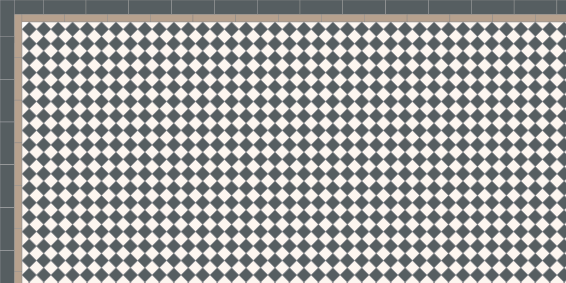
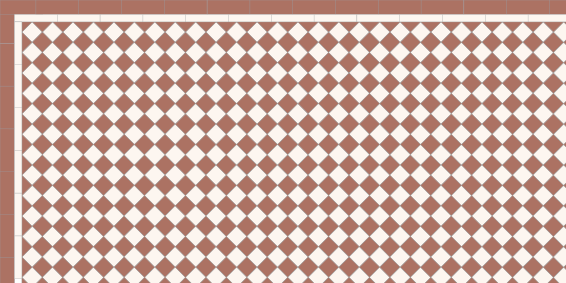
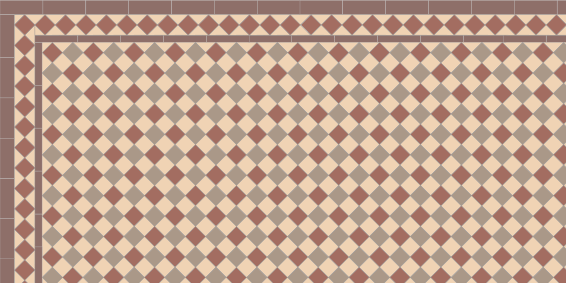
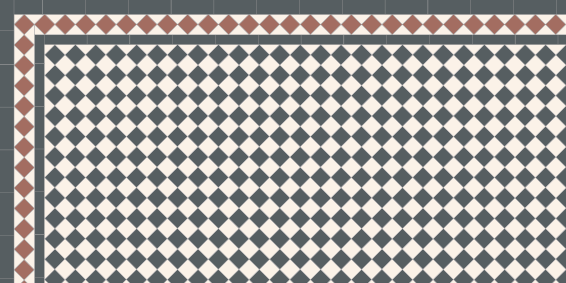
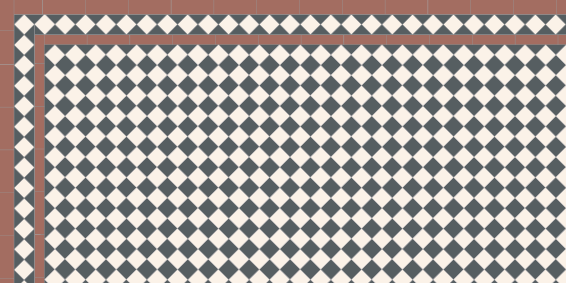
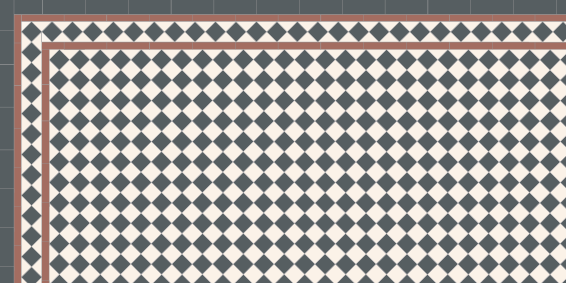
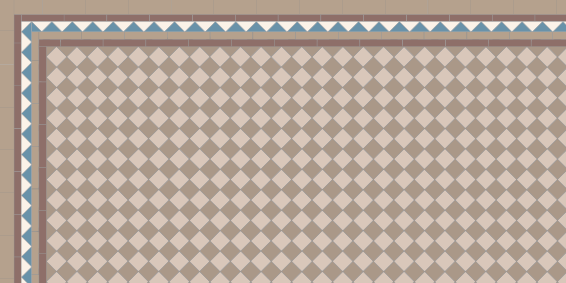
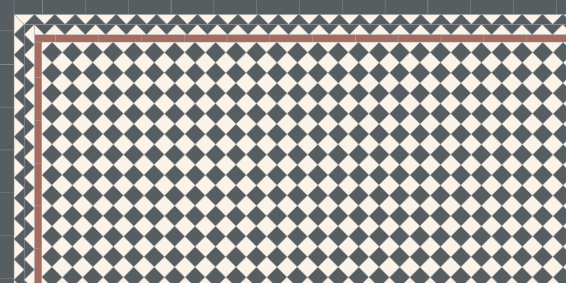
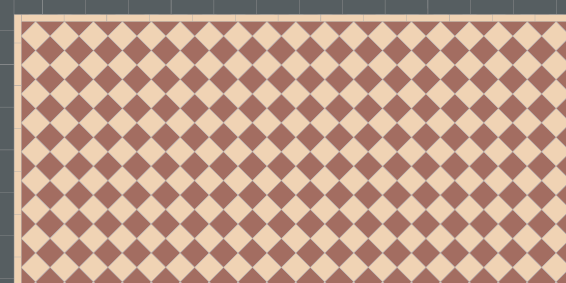
When designing a front garden, you can select alternative colour combinations, such as black and red, red and white, or brown and white, as they often harmonise with specific architectural materials, like brickwork.
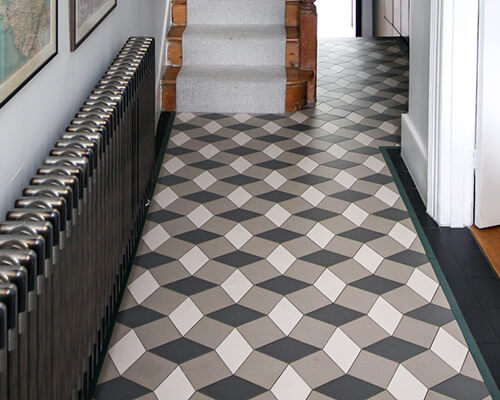
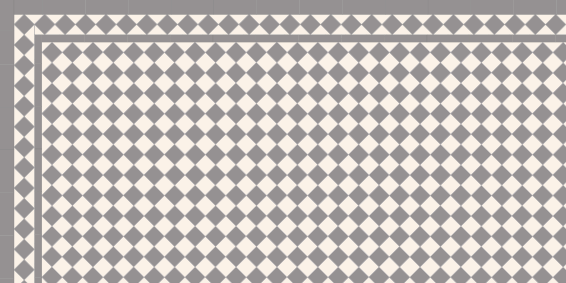
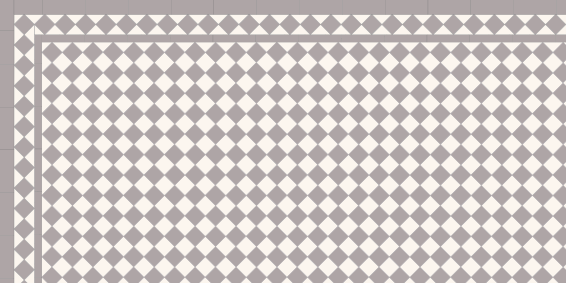
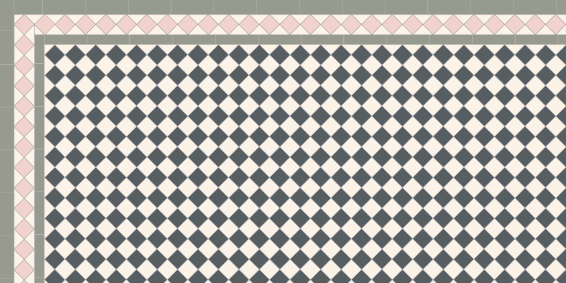
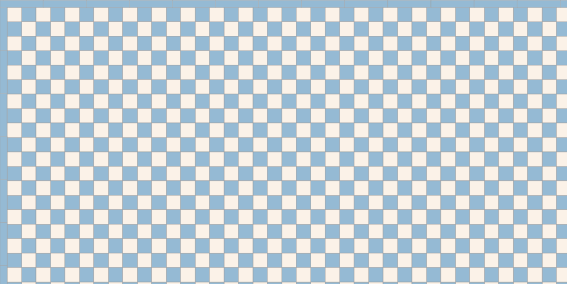
For a softer, more modern feel, grey tones create a cooler, understated look that works beautifully in contemporary interiors.
The 50 mm tile size is particularly popular, allowing a neat integration into compact areas such as porches, fireplace hearths, and bathrooms while preserving the classic proportions of the design.
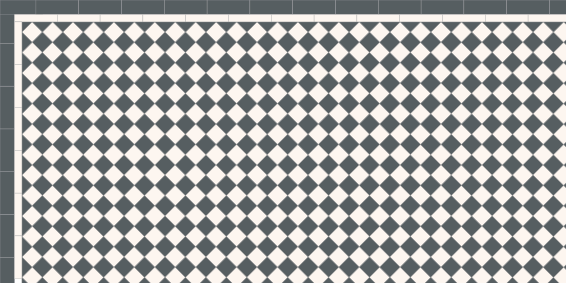
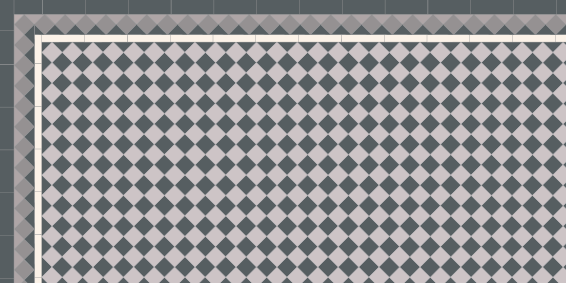
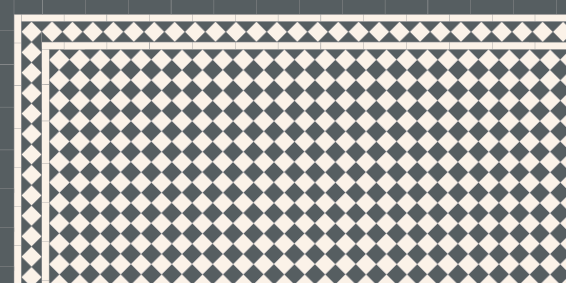
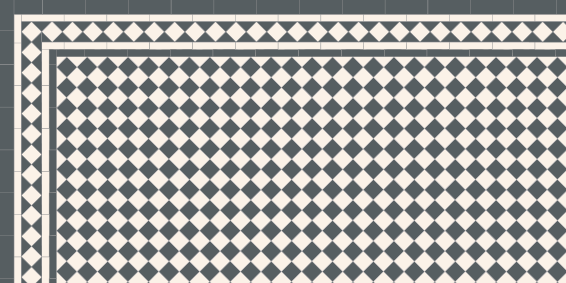
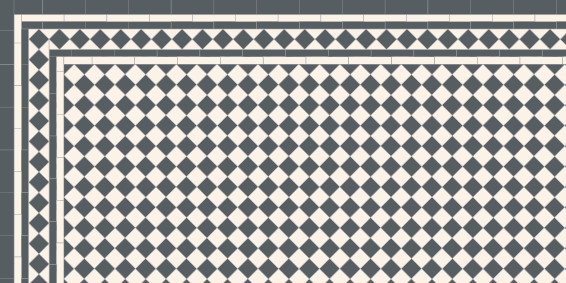
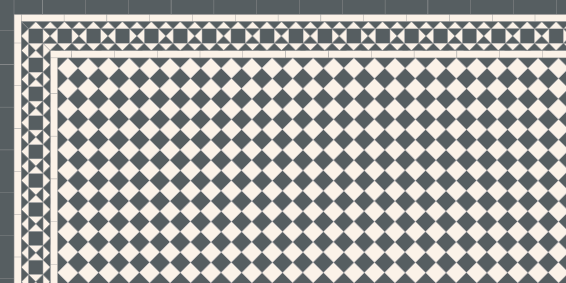
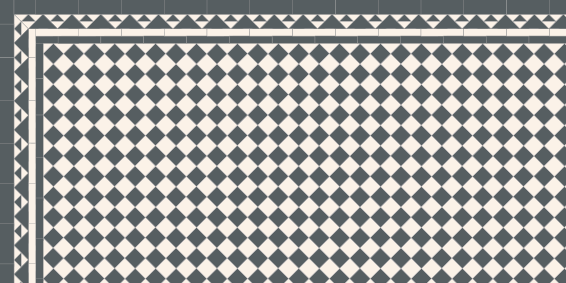
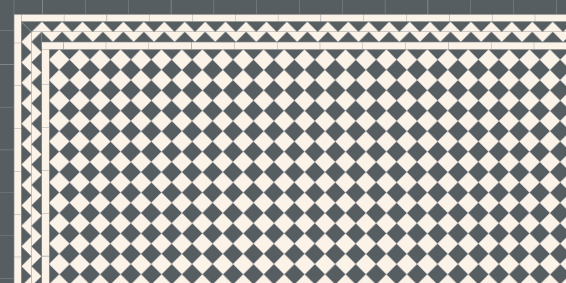
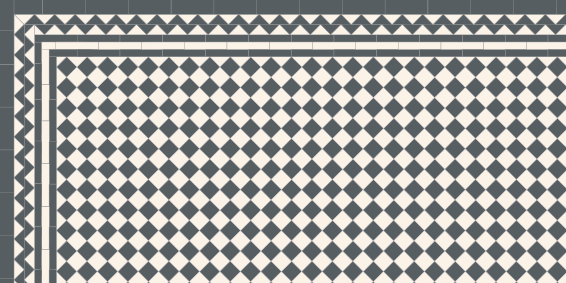
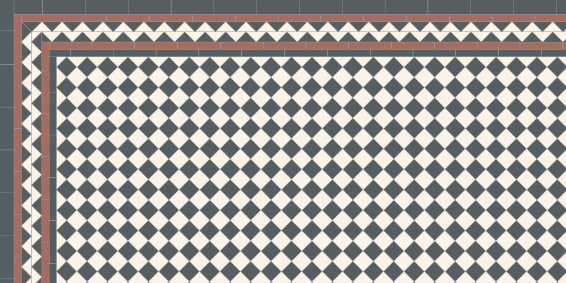
A well-chosen border can elevate a chequerboard design, adding depth and decorative rhythm. The diamond border remains the most common choice for this layout, admired for its simplicity and balance. Meanwhile, our favourite, the zigzag border, is a genuine Victorian classic, built from triangles that create visual contrast and a striking sense of movement.
Inspiration

Narrow your results:
About this design selection
The designs included in this selection are limited to those that feature photographs of the design installed in these spaces.
Remember, our designs and tiles can be used anywhere inside and outside your home. Reach out to our sales and design team to talk about your space.
Explore all designs50 designs


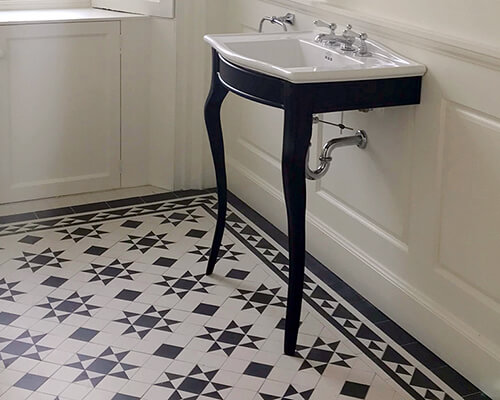

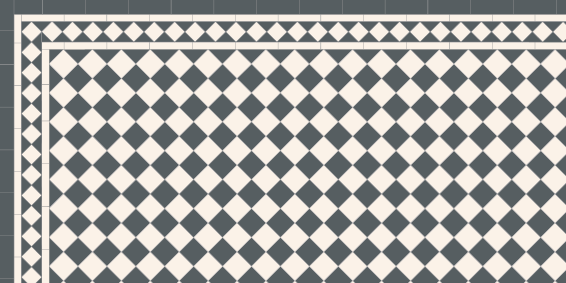
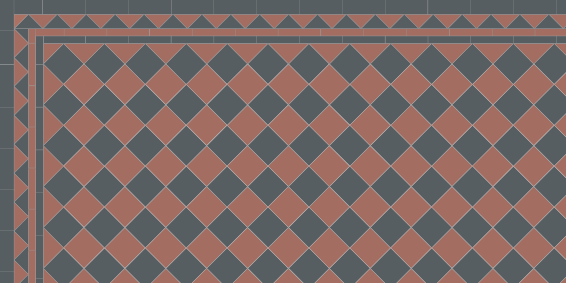
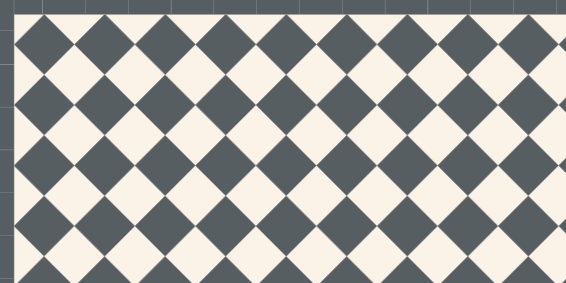



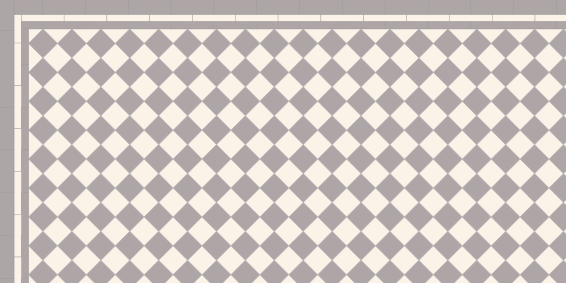
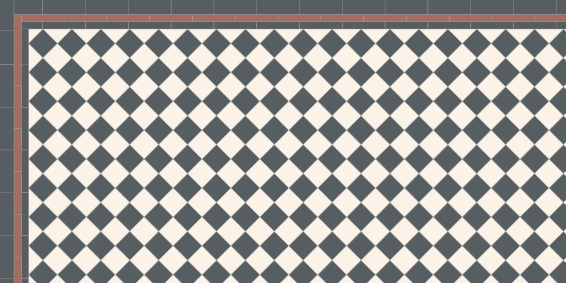
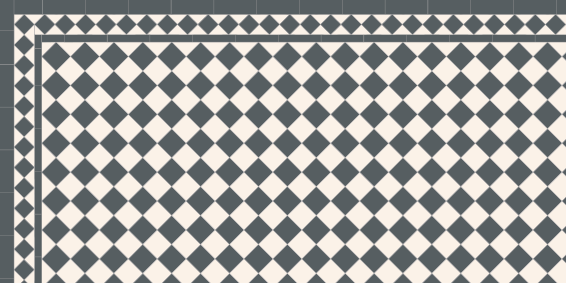
The space filter matches designs that include photographs of how it looks installed in that space. In this instance we don't have any example installation photographs available.
Please get in touch and we can help visualise a mosaic floor
We don't have any designs of this type prepared, but as all of our designs can be customised, please get in touch. We will help design a mosaic floor
What defines a chequerboard floor?
A chequerboard tiled floor is one of the most enduring and recognisable geometric patterns in architectural history. Formed from square tiles, the pattern relies on proportion, alignment and contrast rather than ornament. Its clarity gives it remarkable versatility, making it comfortable in both period properties and contemporary interiors.
Although visually simple, a chequerboard floor demands precision. The success of the design lies in accurate setting out, consistent tile sizing and a balanced relationship between colour, scale and the surrounding space.
Materials
In the Victorian period, architects commonly specified chequerboard floors in unglazed vitrified tiles, choosing them for their exceptional durability and through-body colour. This dense ceramic material excelled in high-traffic areas such as hallways, entrances, and paths, where people needed resistance to wear and ease of maintenance. Today, our heritage reproduction tiles carry this Victorian tradition forward, matching the historic appearance and durability.
Pattern and scale
The chequerboard layout follows a strict square grid, but scale actively shapes how you read the design within a space. Smaller tile formats, such as the 50 mm square, create a more intricate pattern that people commonly associate with Victorian and Edwardian interiors, while larger squares provide a calmer, more contemporary rhythm. By adjusting scale, you can proportion the design to suit rooms of varying size and width, ensuring the pattern sits comfortably rather than overwhelms. A decorative border clearly defines the floor within its setting and adds a layer of ornament that brings clarity, structure, and visual refinement to the overall design.
Colour combinations
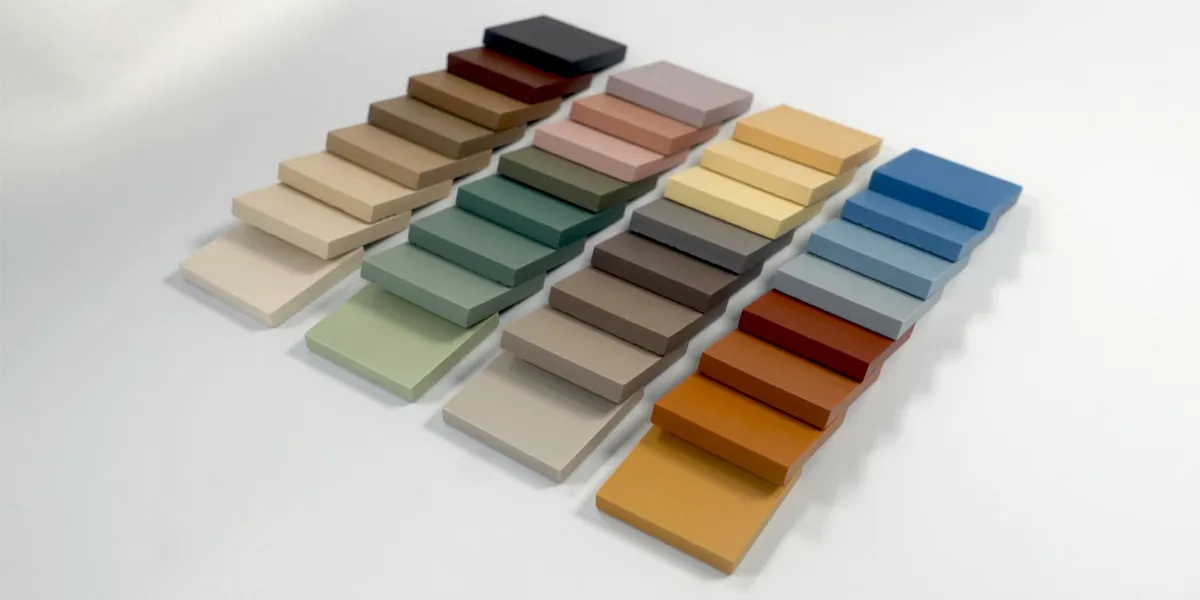
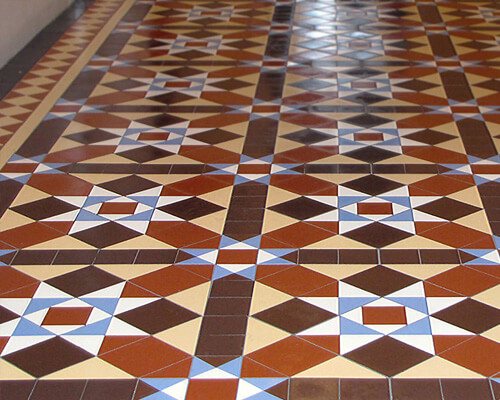
Black and white remains the most recognisable chequerboard pairing, valued for its sharp contrast and timeless appeal. Historic schemes, however, often favoured softer combinations using reds, yellows, browns and greys, creating contrast that harmonised with surrounding architectural features and the broader colour palette of the space.
Borders and setting out
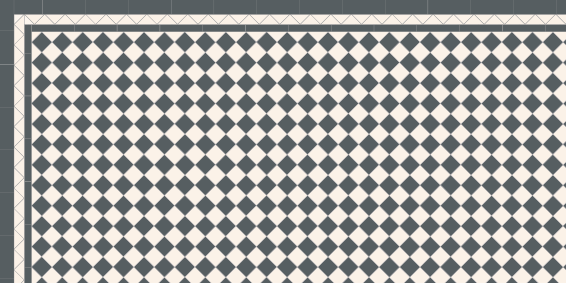
While you can lay a chequerboard without a border, framing the pattern controls alignment and ensures the design sits confidently within a space. Borders also let the floor respond cleanly to door thresholds, architraves, and irregular room shapes. Details such as a diamond border or a three-line border define and decorate the edge, bringing clarity, balance, and a sense of completion to the finished scheme.
Recently viewed ...
Prices exclude VAT