Classic 50
LM-033

Victorian fireplaces often combined two tiled elements: decorative inserts set within the cast-iron surround and the tiled hearth beneath. Together, they showcased ornament, colour and pattern, carrying some of the era's most expressive tile designs, from hand-cut glazed shapes to finely painted florals and symmetrical motifs.

The hearth, along with the tile inserts, featured its own decorative language and employed a more geometric scheme to complement the fireplace's colours and proportions.
The exposed front of the plinth that sits directly in front of and beneath the fire and grate is what forms the hearth and endures far more wear and tear. Over time, many original hearth designs have been damaged, replaced by new styles or completely lost.
A new tiled hearth offers a chance to reinstate that sense of artistry and introduce personalisation through your choice of pattern and palette. Even when the fire no longer functions, the hearth continues to draw the eye and provides a compact canvas for thoughtful design.

Tiles can bring a calm precision to a small space, especially a hearth, where every detail counts. Victorian hearths relied on well-judged proportions and smaller tile formats to achieve crisp, balanced designs, and the same sensibility still guides what feels right today. When the geometry becomes too large or too open, the pattern can lose definition and sit awkwardly against the scale of the fireplace.
Every hearth has characteristics that guide design choices. Some retain ornate cast-iron surrounds and decorative inserts that call for a complementary geometric layout. In contrast, others have had the inserts removed completely, leaving a clean brick recess that suits a quieter, more restrained aesthetic.
There is no single approach, as every fireplace carries its own history and atmosphere. Thoughtful attention to proportion and colour will help the hearth sit comfortably within the room. When a design feels in tune with its surroundings, the result is both confident and harmonious.

Victorian hearths typically feature borders on three sides, and this approach still provides a natural framework for the design. It allows the geometry to flow toward the fireplace opening, giving the layout a settled, intentional feel.
In smaller Victorian fireplaces, such as those in bedrooms, simpler, narrower borders tend to fit best. More decorative borders widen quickly and reduce the field of the pattern, which can leave a compact hearth feeling tight or overworked.
Elaborate borders can enhance the beauty of larger hearths, but careful attention to proportion and border placement is essential for a harmonious look. Borders should not fall within the firebox area, as this can make them feel disconnected from the rest of the layout. Instead, allow the border to meet or align with the inner edges of the mantel legs, which usually produces a natural visual boundary.

If you choose not to use a border at all, aim for precise symmetry so the tessellation holds the space cleanly without awkward cuts. A hearth design should always sit centrally beneath the mantel, as even a slight shift to the left or right unsettles the composition.
Subtle adjustments are often possible. You can push the layout in or pull it out slightly to avoid small, uneven cuts at the base of the mantel legs or skirting boards. Increasing the border width where there is tolerance is one way to achieve this and maintain a balanced look. This level of refinement ensures the pattern feels deliberate rather than compromised.

When the hearth stands on a raised plinth, treat the exposed edges as you would a step. Round-edged tiles and matching corners soften the transition, protect vulnerable edges and create a neat, durable perimeter that holds up well over time.
As a starting point, a small tessellation paired with a two-line or three-line border, or a simple diamond border, provides a reliable, well-balanced foundation for most hearths.
To ensure a confident final design before laying any tiles, you should take accurate measurements, which will help create scaled visualisations. This approach allows you to test proportions, adjust alignment, and effectively confirm your design's fit.
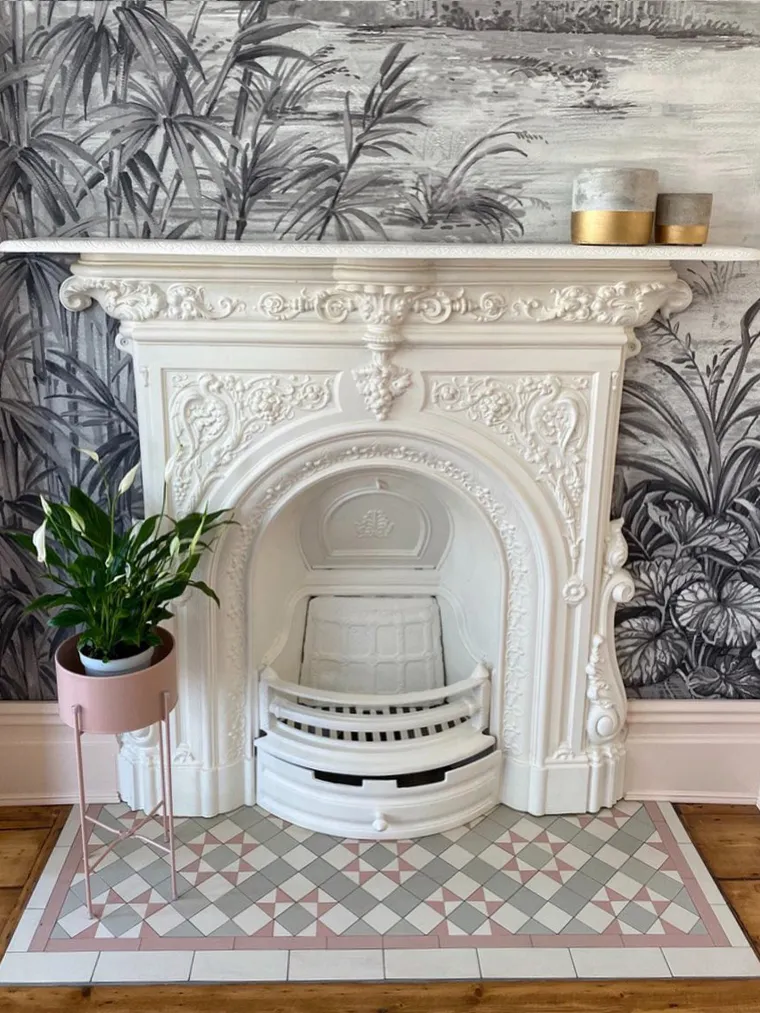
Design and customisation shape the overall impact of a tiled hearth. You might coordinate the layout with the room's existing colours, introduce a stronger accent or balance a freshly painted cast-iron surround.
Some clients paint the recess in a bright tone, while others retain the classic blackened finish. Our full palette allows you to complement or contrast these choices, and we can guide you through options that help the hearth sit comfortably within the broader scheme.
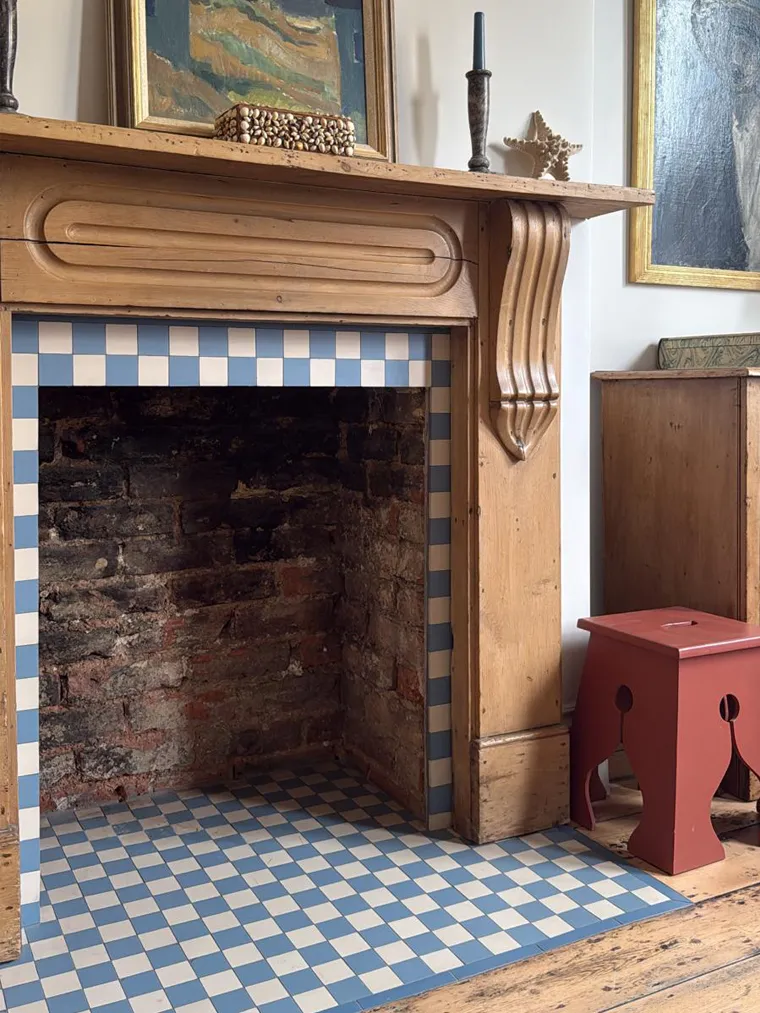
Victorian builders originally used glazed tiles on hearths because they resisted soot and charcoal. Today, most fireplaces serve a decorative role, and our unglazed heritage range performs exceptionally well in these settings. Once sealed, the tiles resist marking and remain easy to maintain, making them a reliable way to reintroduce colour and pattern to a period feature.
A fireplace anchors a room's identity, and restoring the hearth gives this architectural element renewed purpose. Thoughtful tilework revitalises the feature, connects it to the surrounding interior and brings the fireplace back into focus.