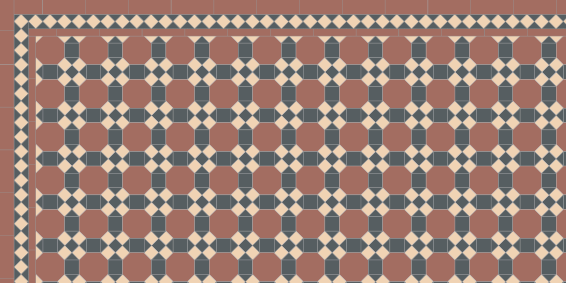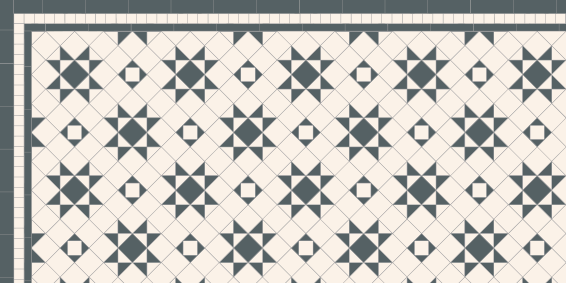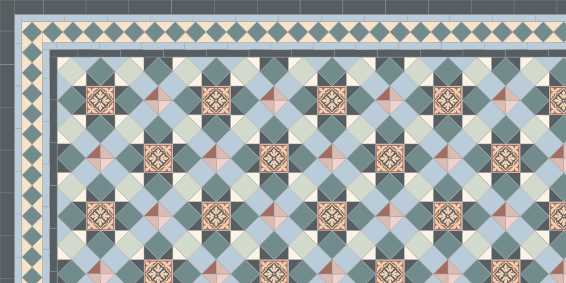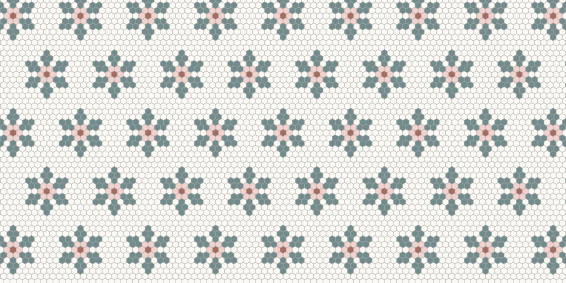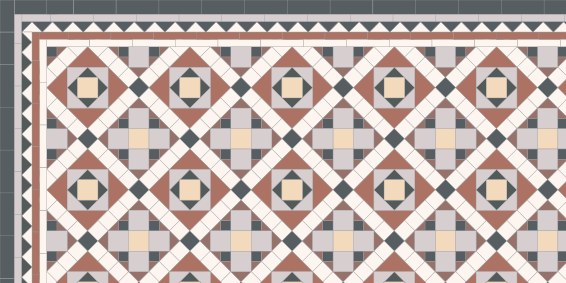

Octagon Dot 150
LM-218

The bathrooms we're accustomed to today, with their distinct fittings, emerged more recently than you may think. A collection of washing amenities in a dedicated space only became the norm towards the late 19th century. Early Victorian homes made no provision in their planning for a dedicated bathroom space.
However, as indoor plumbing advanced, washing and bathing transitioned from communal areas or kitchens into a private and more purposeful space that would serve not just to promote cleanliness but served as a tonic for wellbeing.

Today, what we recognise as "Victorian style" in bathrooms blends influences from both Victorian and Edwardian periods, capturing the practical elements, materials and decor that reflect the origins of a distinct and charming era.
Victorian-style bathrooms and cloakrooms remain popular as the appreciation for their rich character, elegant detailing, and heritage-quality craftsmanship has not disappeared.

The era's ornate fixtures and handcrafted tiles continue to inspire modern interior design. Combining decorative wall and floor tiling and classically styled sanitary ware evokes a sense of luxury and refinement reminiscent of a bygone era.

The rapid cultural change seen during the Victorian period sparked an era of eclecticism. This approach to styling saw the playful use of colour and ornamentation and inspired experimentation and novelty. Today, with unprecedented access to diverse styles through technology, we continue to embrace these values more than ever.
Achieving a Victorian aesthetic means embracing key design elements from the era, including traditional tiling, vintage fixtures, and historically inspired colour palettes.
Freestanding bathtubs, vintage-style sinks and brass or copper fixtures are a great way to capture the look. Walls were often half or fully tiled but would also incorporate brightly coloured wallpaper or wood panelling.

Typically, colourful or plain geometric mosaic patterns adorn the flooring. Focusing on these details in a small space, enhances a room's character and creates a sense of luxury without overwhelming it.
At London Mosaic, we've witnessed many times how Victorian-style tiles can revitalise a space, and transformations of bathrooms can be particularly striking.

As indoor plumbing advanced in the late 19th century, Victorians recognised that wooden floors weren't the most practical choice for bathrooms, especially with the introduction of hot water pipes and tanks. As homeowners became more focused on cleanliness, they began installing tiled floors in wet areas, appreciating their durability and easy maintenance.
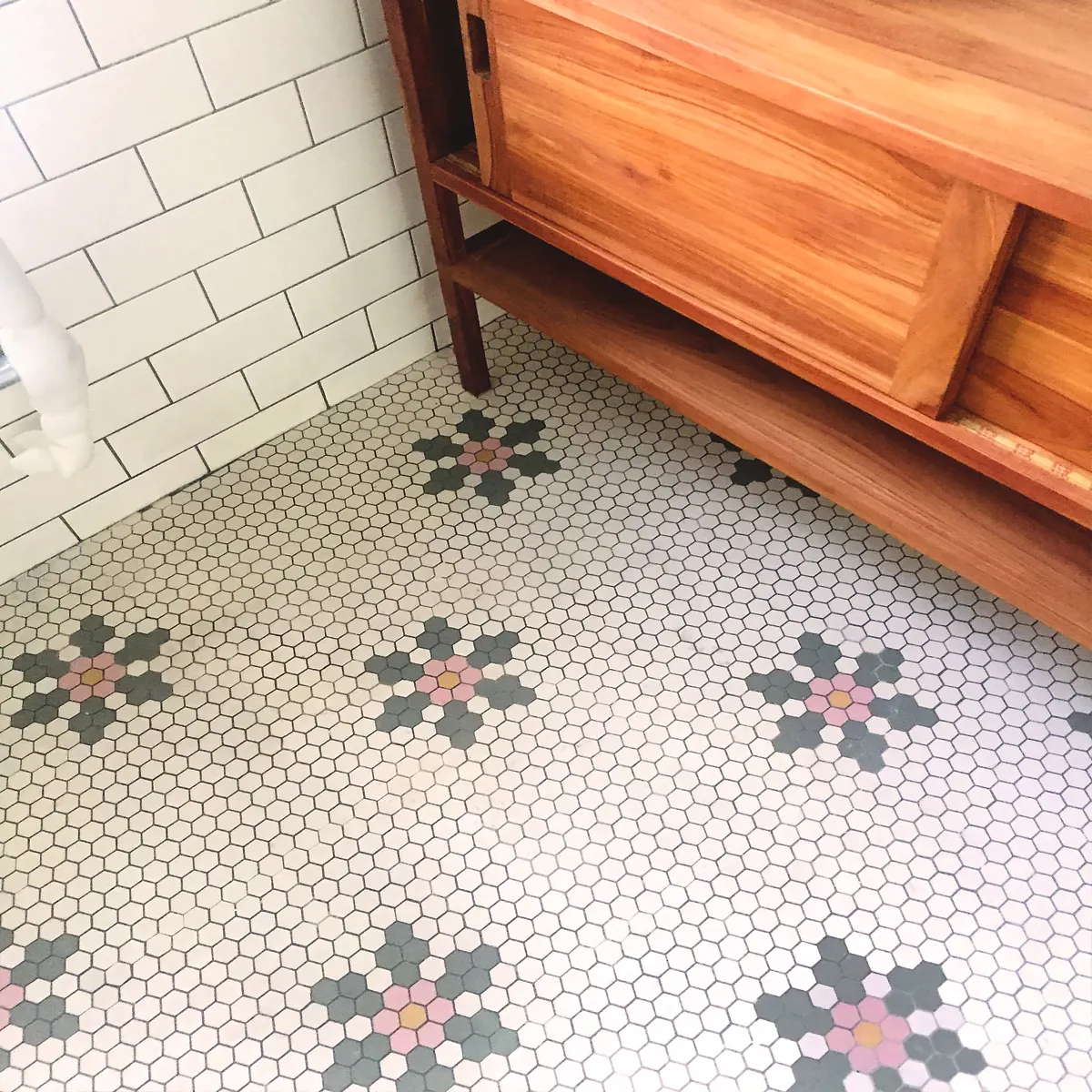
Wealthier households embraced intricate geometric mosaics featuring hexagons, octagons, and bold chequerboard designs, while more modest homes often opted for linoleum. White became a prominent colour choice, symbolising cleanliness and making it easier to spot dirt.
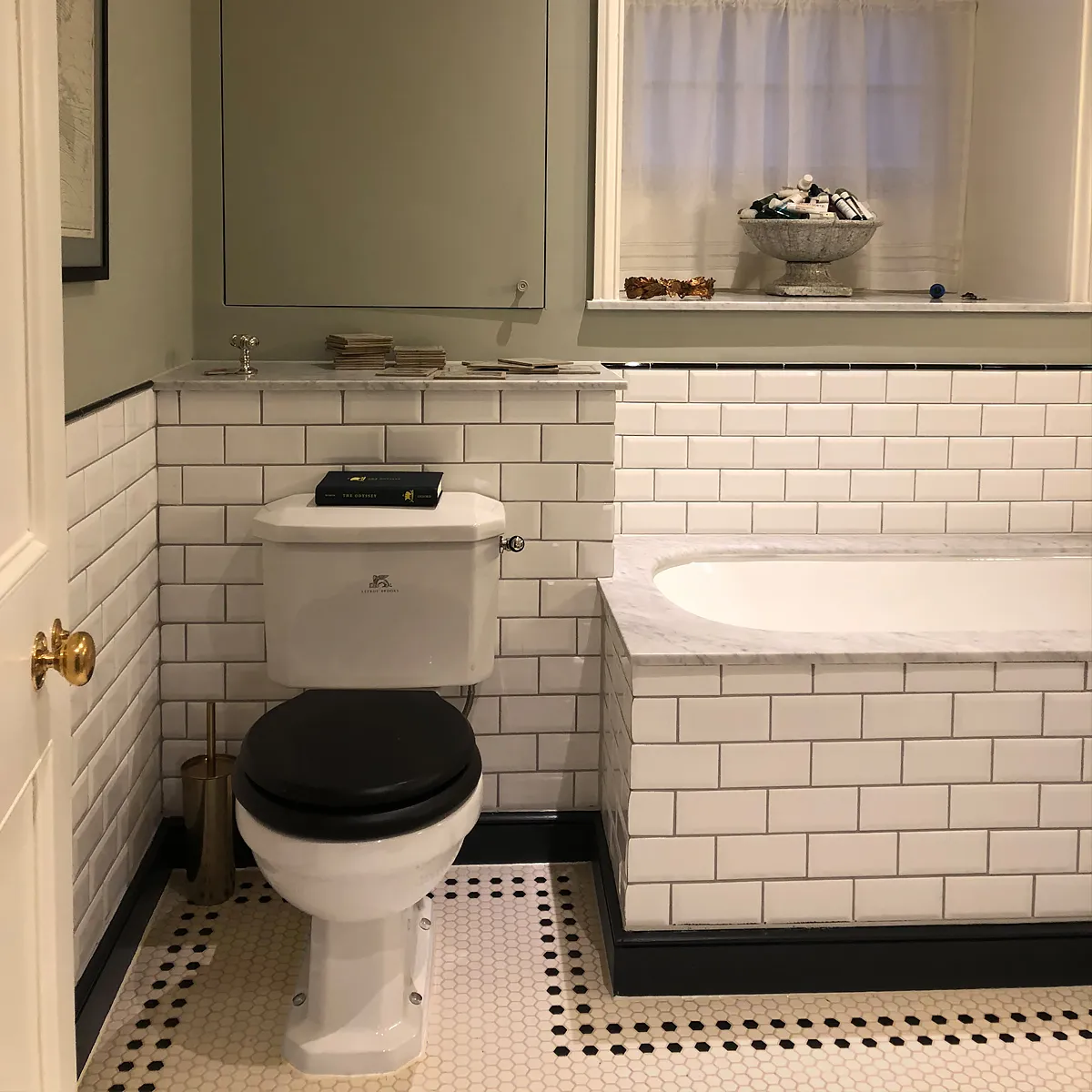
Today, Victorian-style flooring continues to inspire modern interiors. Scaled-down hexagon tiles in a single shade can create a subtle yet historically accurate look for smaller spaces.
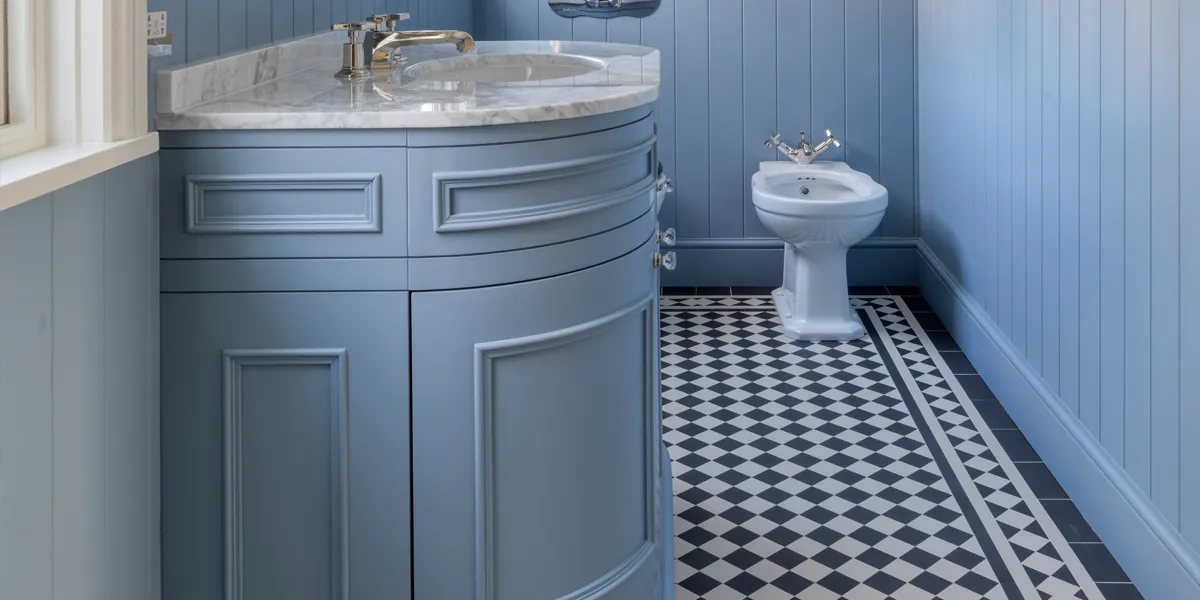
By combining traditional tiling with modern features, like sleek vanity units or minimalist mirrors, you can create a stylish, comfortable and practical space.

It’s also possible to recreate the Victorian look using reproduction heritage-style glazed ceramic tiles in various colours and patterns on your bathroom walls.

Use decorative border tiles or dado mouldings to frame your design to add authenticity. These reproduction tiles are perfect for creating a feature wall or full-height tiling around a bath or shower area.

Dark, rectangular tiles create a striking Victorian look. Pairing them with decorative mouldings or a contrasting border enhances the period feel.
Care during installation is essential to honestly and accurately emulate the style, especially keeping the grout lines as small as possible.

While complex patterns and high decoration often characterise Victorian tiling, achieving this aesthetic doesn't require a large budget. Smaller washrooms or lavatories can benefit from heritage-quality Victorian tiles, such as simply framing a small tiled floor area with a decorative border or creating a panel of glazed wall tiles as a feature.
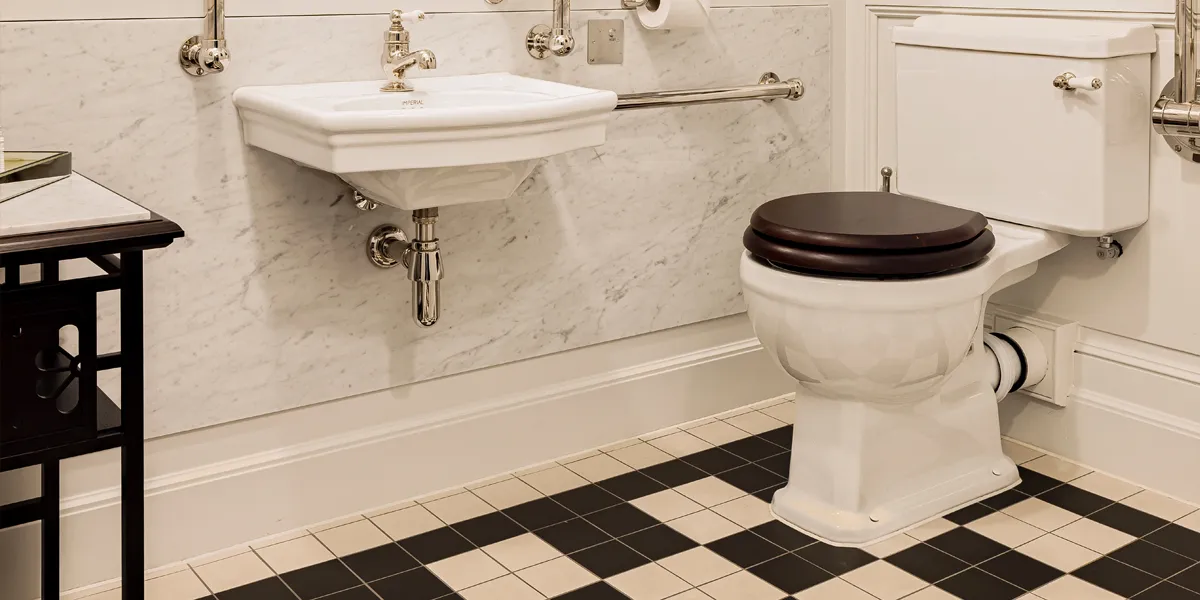
Opting for monochrome patterns such as the simple and classic chequerboard can provide an authentic look while keeping costs manageable.

Incorporating a Victorian theme into a bathroom or toilet is a great way to add character, even in a smaller space. The most popular ways to achieve this are by choosing geometric tiled flooring, glazed wall tiles, or period-style decorative features and fittings. The Victorian style is a vehicle for colour and elegance. By embracing these elements, you can create space full of character with a nod to an iconic era in interior design.